Mental health is a vital part of our overall well-being. Yet for many decades, it has remained under discussion and misunderstood. World Mental Health Day, observed every year on October 10th, serves as a powerful reminder to prioritize mental well-being with awareness, compassion, and proactive care. Each year, this day encourages individuals, families, workplaces, and communities to understand the value of mental health and take action.
This blog explores simple yet effective self-care tips, emotional wellness practices, and healthy lifestyle habits to promote positive mental health for people of all ages. Whether you’re a student, a working professional, a caregiver, or a parent, these supportive strategies can help you create balance, reduce stress, and build resilience.
Understanding Mental Health in 2025
In today’s fast paced, digitally connected world, mental health influences every aspect of life: productivity, relationships, and physical health. Mental wellness refers to the state in which an individual can cope with stress, maintain healthy relationships, and adapt positively to challenges.
While medical professionals play a major role in diagnosing and treating mental health issues, everyday self-care practices can significantly reduce stress and promote resilience.
The Role of Self-Care in Mental Wellness
Self-care is more than just spa days or taking breaks; it involves conscious activities that nurture your emotional, physical, and mental well-being. When practiced consistently, selfcare helps maintain balance and prevent mental health deterioration.
The key principle here is proactivity: caring for your mental health before problems become overwhelming.
Top 10 Self-Care Tips for a Healthy Mind
1. Practice Mindful Breathing
Deep, intentional breathing reduces anxiety and activates the body’s relaxation response. Take five minutes daily to focus on your breath, inhaling deeply and exhaling slowly.
2. Maintain a Balanced Diet
Nutritional psychiatry shows strong links between food and mood. Fresh fruits, vegetables, omega-3 rich fish, and whole grains support brain function and emotional stability.
3. Prioritize Quality Sleep
Sleep deprivation is directly linked to irritability, poor focus, and mood disorders. Aim for 7–8 hours of restful sleep every night and establish a calming bedtime routine.
4. Engage in Physical Activity
Exercise releases endorphins—the “feel-good” hormones. Even a 20-minute walk or yoga session daily can enhance mood and reduce symptoms of depression.
5. Set Healthy Digital Boundaries
Too much screen time can heighten anxiety. Reduce exposure to negative news and social media pressures by setting time limits for online activities.
6. Stay Socially Connected
Support networks reduce feelings of isolation. Schedule regular catch-ups with friends or family, even virtually, to maintain emotional well-being.
7. Practice Gratitude
Writing down three things you are grateful for each day rewires the brain to focus on positivity instead of stress.
8. Learn to Say ‘No’
Boundaries protect mental health. Avoid taking on excessive responsibilities that lead to burnout.
9. Seek Professional Support
Therapists and counselors can guide you through difficult times, providing strategies and emotional tools for coping.
10. Engage in Creative Activities
Art, music, dance, or journaling can serve as therapeutic outlets for expressing emotions in a healthy way.
Healthy Mental Health Practices for Everyday Life
Beyond self-care tips, adopting healthy lifestyle habits ensures long-term mental wellness.
Mindfulness and Meditation
Mindfulness encourages staying present in the moment, which reduces rumination and worry about the future. Meditation helps train the brain for greater emotional control.
Stress Management Techniques
From progressive muscle relaxation to guided visualization, stress management techniques empower you to control physical and emotional reactions to stressors.
Work-Life Balance
Flexible schedules, regular breaks, and designated “non-work” hours help preserve mental health and prevent professional burnout.
Journaling for Clarity
Writing thoughts daily helps process emotions and identify challenges more objectively.
Breaking the Stigma: Mental Health Awareness
Despite increased dialogue, stigma still keeps many from seeking help. World Mental Health Day combats these barriers by spreading knowledge and encouraging empathy.
Education leads to understanding, which leads to acceptance—and acceptance is key to creating a supportive environment around mental wellness.
How Organizations Can Support Mental Health
Corporate wellness programs, emotional support workshops, and flexible work policies can create safer, healthier workplaces. Employee Assistance Programs (EAPs) also play a pivotal role in providing confidential counseling services.
Self-Care in Digital Spaces
The online world can be both a source of inspiration and stress. Channels like meditation apps, mental health podcasts, and online therapy have made self-care more accessible. However, awareness around cyberbullying, misinformation, and digital overstimulation is crucial.
Understanding 2025 Mental Health Self-Care Trends
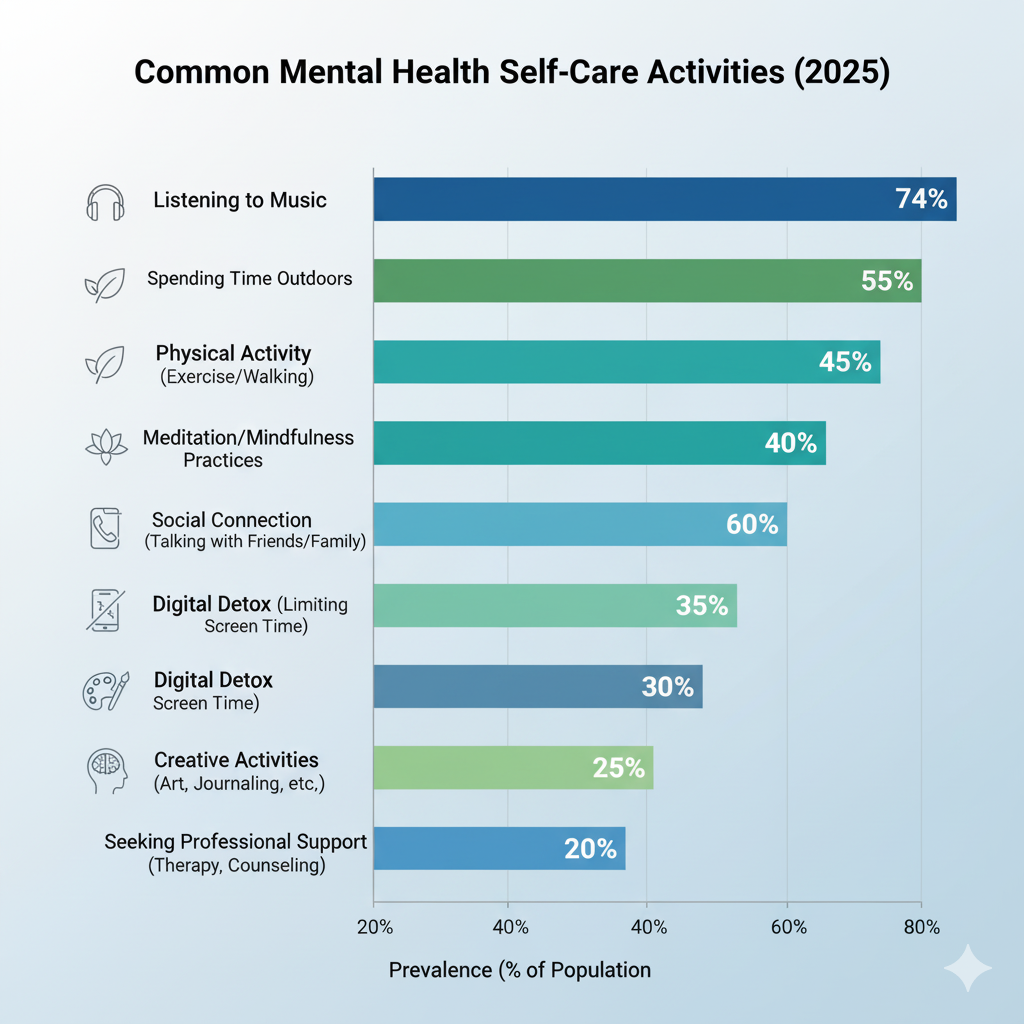
Graph on Self-Care Data
The pie chart, based on 2025 data, highlights popular mental health self-care activities. Listening to Music is overwhelmingly the most common activity at 74%, indicating its significant role in well-being. Spending Time Outdoors (55%) and Physical Activity (45%) also feature prominently, underscoring the importance of nature and movement. Meditation/Mindfulness (40%) and Social Connection (35%) reflect a focus on inner peace and interpersonal relationships. Digital Detox (30%) and Creative Activities (25%) show an awareness of screen-time impact and the benefits of artistic expression. Notably, Seeking Professional Support is at 20%, suggesting that while self-care is prevalent, professional help remains a vital, albeit less frequent, component of mental health strategies.
Inspiring Change: World Mental Health Day 2025
This year’s theme focuses on mental health equity, ensuring access to mental health support for all communities, regardless of socioeconomic background. Governments, NGOs, and healthcare bodies are urged to bridge the accessibility gap and provide affordable, quality care.
You don’t need to wait for the next World Mental Health Day to care for your mind. Small, consistent changes can lead to a big transformation. Whether it’s breathing exercises, journaling, or visiting a mental health professional, start now.
Your mental health is as important as physical health. Investing in yourself is the first step toward a happier, healthier life.